
APS Global Physics Summit 2026: Highlights in Ferroelectric Materials Research
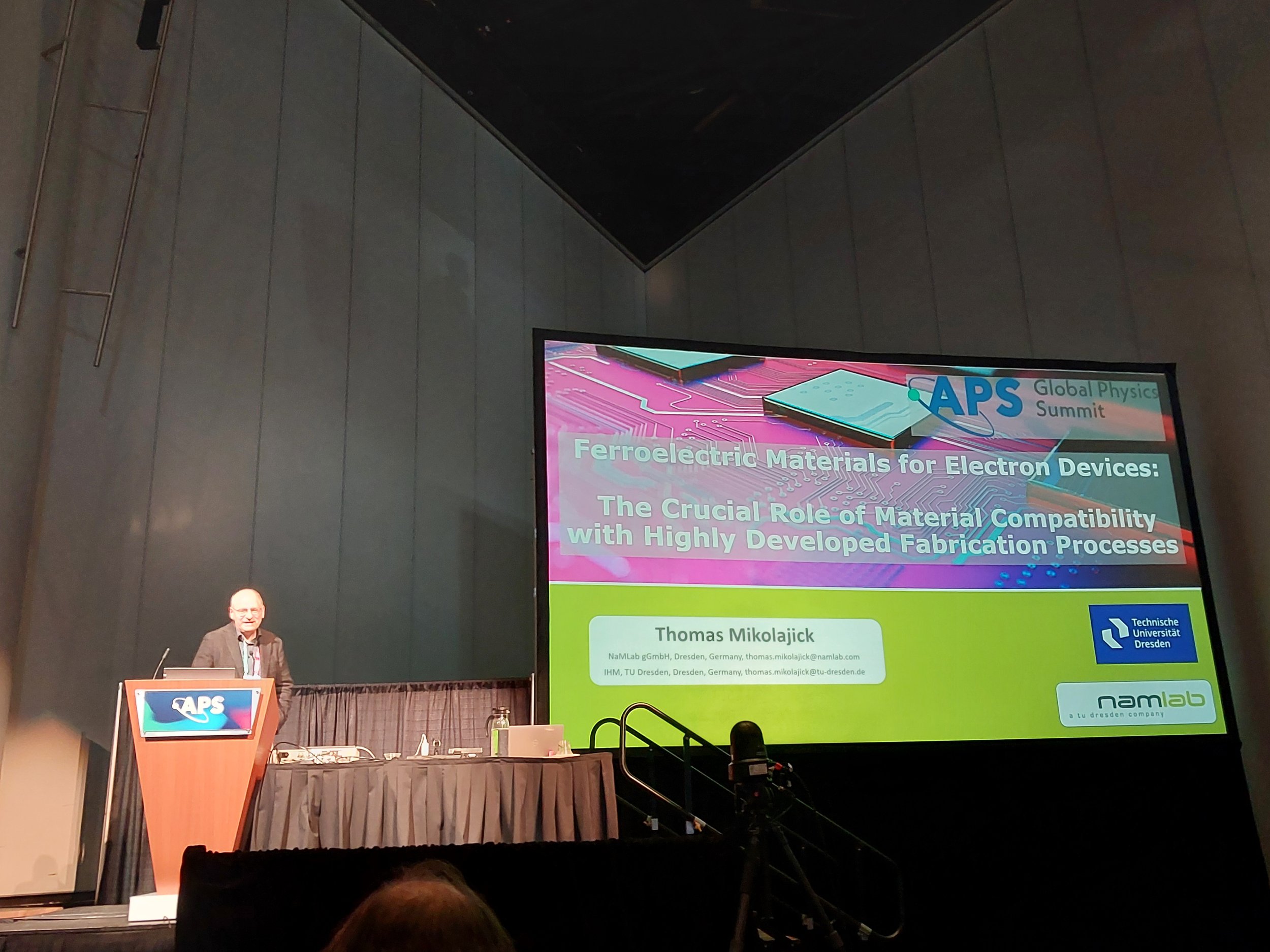
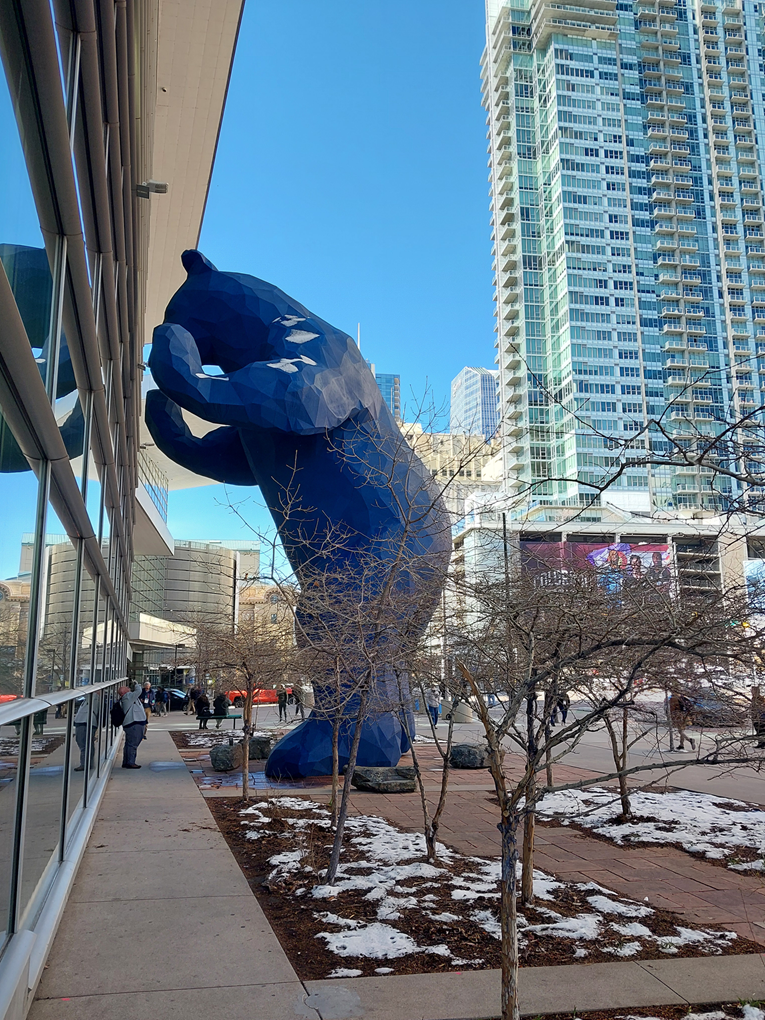
Over 14 000 scientists came together for the APS Global Physics summit held in Denver, Colorado, USA from 15th-19th March 2026.
The scientific and technical sessions were preceded by plenary lectures from the three 2025 Physics Nobel laureates for their work on macroscopic quantum phenomena: John Martinis, Michel Devoret, and John Clarke.
Hundreds of industrial companies hosted stands, including a strong presence from quantum technologies.
The Division of Materials Physics (DMP) prizes were awarded to both Thomas Mikolajick (NaMLab) and the Ferro4EdgeAI consortium, who gave a lecture on ferroelectric materials for electronic devices, and to Sayeef Salahuddin (University of California, Berkeley), who presented groundbreaking results on ferroelectricity in ultrathin binary oxides.
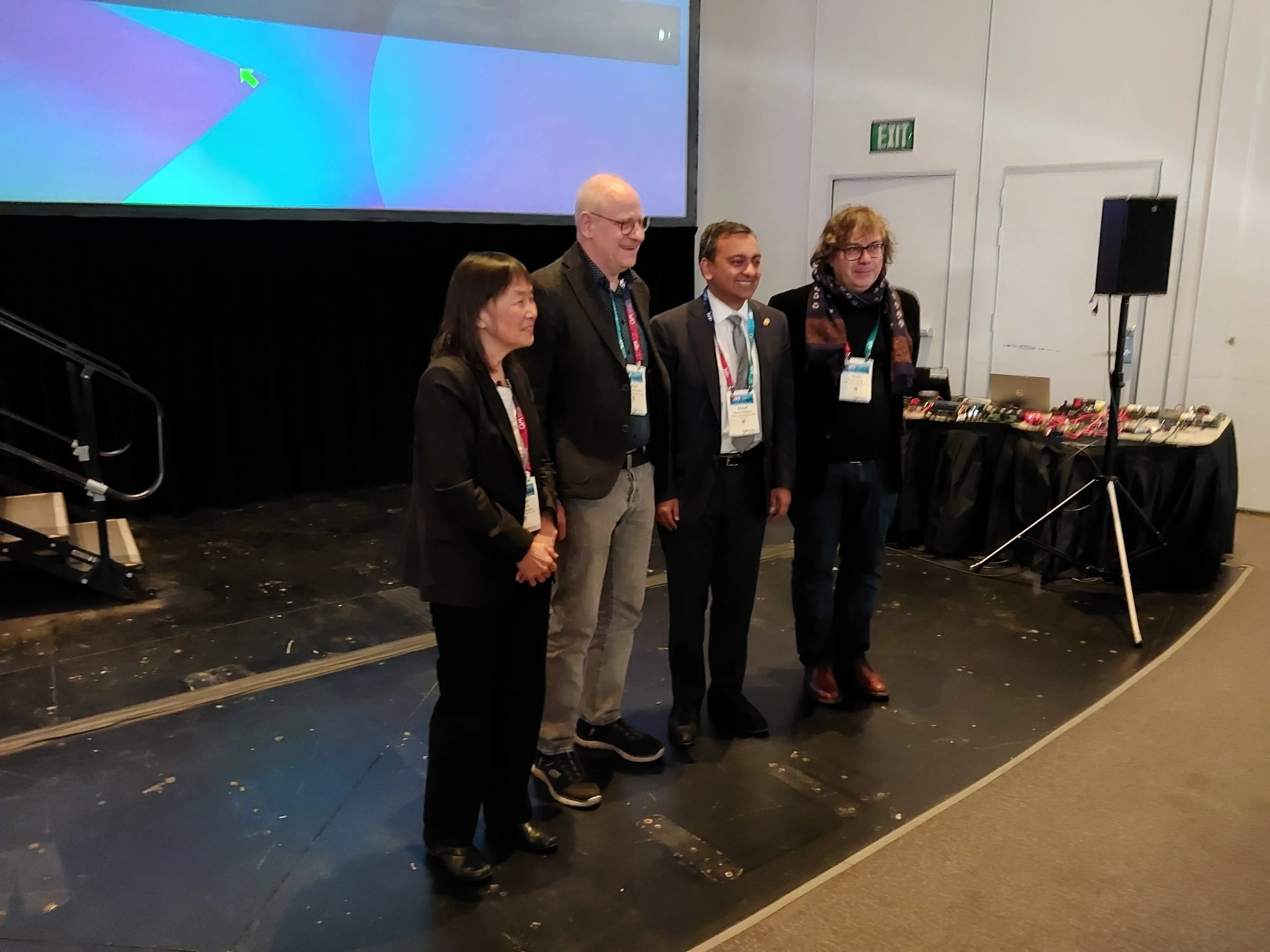
Most of the ferroelectric-related work was presented in the DMP sessions. Highlights included Jan Musfeldt (University of Tennessee) on hafnia under pressure, superlattice coercive fields presented by Shi Liu from Westlake University, and lower-limit coercive fields, suggesting a combination of the two main switching mechanisms: Kolmogorov–Avrami–Ishibashi (KAI) and nucleation-limited switching (NLS).
Yu Liu, also from the University of Tennessee and in collaboration with Oak Ridge National Laboratory, presented scanning probe analysis of combinatorial libraries of wurtzite ferroelectrics AlScBN, while Kai Huang from University of Nebraska showed the possibility of multistate ferroelectric switching in wurtzites.
Vevek Dey (Indian Institute of Science) showed fascinating results on how harnessing noise could enable sub-coercive field switching. Finally, several presenters showcased results on 2D sliding ferroelectrics.
Nick Barrett from the Ferro4EdgeAI consortium presented his lab’s results on the accurate quantification of oxygen vacancies using XPS and HAXPES.